Judicial Council Act Violation Regarding Criminal Court Panel Composition
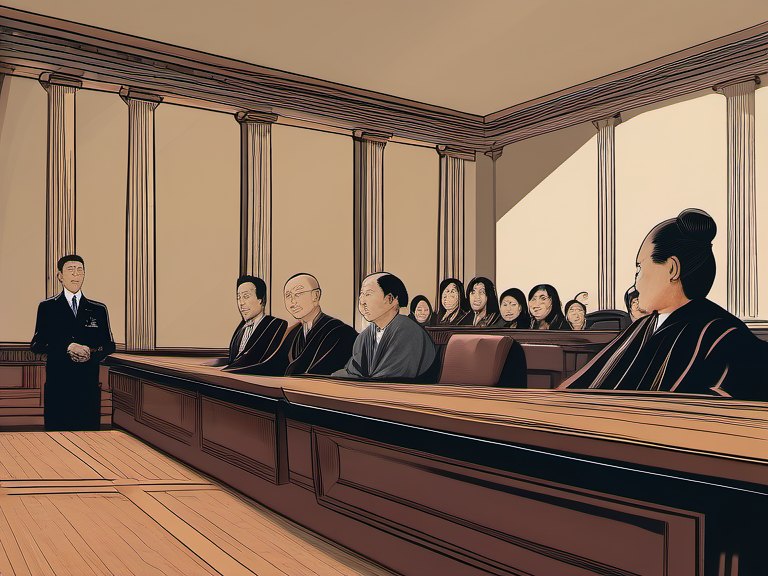
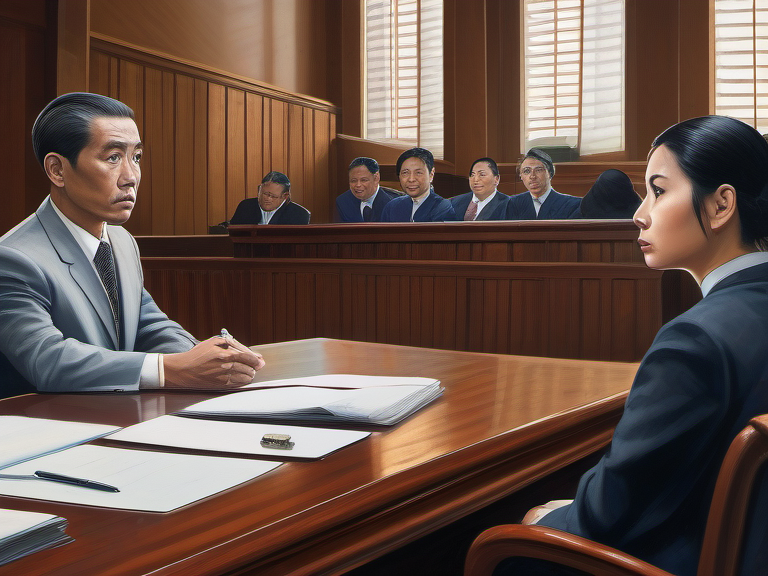
Exhibit 2: The Prosecutor is the Plaintiff in this case, prosecuting Mr. K., before the Criminal Court. The court scheduled the first examination of the plaintiff’s witnesses for January 5, 2047. The judges had already seated two judges and were about to proceed with the case when they adjourned it to a third judge, on February 5, 2047, there was no assistant judge. During the examination of witnesses, the Prosecutor filed a motion to dismiss the panel of judges examining the plaintiff’s witnesses on January 5, 2047, arguing that it lacked the authority due to procedural irregularities. The court ruled on the plaintiff’s motion that the objection to the panel of judges must be made when the court was sitting on the case, which had already passed. Therefore, the Prosecutor waived the right to object to the panel of judges and continued to examine the plaintiff’s witnesses. The Prosecutor then contested the court’s order. The court concluded the case and ruled in favor of the defendant, dismissing the case. The Prosecutor appealed the judgment and the ruling of the lower court, arguing that the lower court was procedurally flawed because the panel of judges and the Prosecutor had objected. Therefore, they requested a new trial. The Court of Appeal ruled on the case, finding that the evidentiary proceedings were proper. Whether the Court of Appeal’s decision is correct. The sitting of the court of first instance must consist of a panel of judges, as stipulated in the Judicial Council Act, Section 26, namely, there must be a panel of judges and not more than one permanent judge. This constitutes a panel of two, and all criminal cases. When it appeared in the proceedings that there were two judges and an assistant judge sitting on the case, it did not comply with Section 26 of the Judicial Council Act, as the assistant judge was not a permanent judge who had the authority to sit with the judges as a panel in the Criminal Court. This is equivalent to having only one judge sitting on the case. The evidentiary proceedings on that day in 2047 were therefore unlawful under the Judicial Council Act (4 points). The Constitution of the Kingdom of Thailand, B.E. 2540, Section 23 states that the sitting of the court must have a judge or a judicial officer in accordance with the provisions of the law. Therefore, the sitting of the court must comply with Section 26 of the Judicial Council Act. The Constitution of the Kingdom of Thailand, B.E. 2540, Section 236, combined (1 point). Therefore, the sitting of the court, with an incomplete panel of judges, was unlawful. Although the Plaintiff did not object and on January 5, 2047, a witness examination was scheduled for the next time, this did not make the proceedings on January 5, 2047, valid. The Prosecutor does not need to object to the panel of judges while the judges are sitting on the case. This case was properly conducted from the beginning, resulting in a loss of the evidentiary proceedings. The appeal is therefore dismissed. The Prosecutor may request a new trial (5 points).