Determining Inheritance Rights Following Multiple Marriages and Adoption
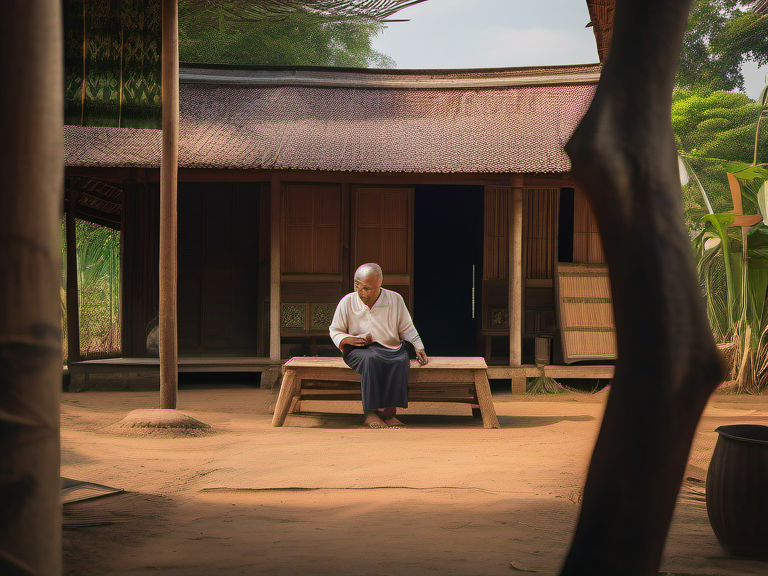

Exhibit 8: Case Information
Mr. Samer was registered as a married man to Ms. Suay on the 22nd of May, with Mr. Neung as a witness. During their marriage, Mr. Samer and Ms. Suay cohabited as husband and wife and had one child, Ms. Go, without registering a marriage. Both Mr. Samer and Ms. Go registered their adopted child, “Song,” on the same day, on January 10, 2520, with Ms. Go as the registering and certifying officer. Song was the first adopted child. Subsequently, on February 9, 2521, Mr. Samer registered a second marriage with Ms. Go, effective February 26, 2523. Mr. Samer used the money he had saved from Ms. Suay to purchase and register the transfer of land and build a house for Ms. Suay to reside in. Thereafter, on March 10, 2526, Mr. Samer formally divorced Ms. Go, who died on May 20, 2530, with Ms. Suay continuing to possess an asset valued at 600,000 baht.
It is requested that the court determine, to the extent possible, whether any party has a right to the aforementioned assets and, if so, in what proportion.
The fact that Mr. Samer and Ms. Go cohabited without registering a marriage constitutes a valid marriage under the law. Similarly, Mr. Samer and Ms. Go registered their adopted child, Song, on the same day, with Ms. Go registering first. Song is therefore the adopted child of Ms. Go, and subsequently, the adopted child of Mr. Samer, simultaneously. According to the Civil and Commercial Code, Section 1598/26, paragraph one, the registration of Song is incomplete and has no legal effect, and Song is not considered an heir.
According to the Civil and Commercial Code, Section 1627, (2 points) the remains of Mr. Samer constitute property.
The fact that Mr. Samer entered into a double marriage with Ms. Go constitutes a marriage, which must be enforced according to the Civil and Commercial Code, as of 2533, and 2519. A double marriage constitutes a violation of the Civil and Commercial Code, Section 1496, regarding void marriages. Prior to a court judgment declaring the marriage void, the marriage must be considered fully effective according to the Civil and Commercial Code, Section 1495.
The land and house are assets that Mr. Samer acquired during his marriage with Ms. Go, and are therefore marital property of Ms. Go. Even after Mr. Samer managed to divide these assets with Ms. Go according to her rights, as stipulated in the Civil and Commercial Code, Sections 1532 and 1533, Ms. Go retains a right to these assets.
The deceased and surviving spouse must divide the marital land and house between male and female heirs. Mr. Samer received one-half of the assets, as stipulated in the Civil and Commercial Code, Sections 1533 and 1625 (1), amounting to one-half, or baht (2 points). The land and house portion constituting the inheritance of Mr. Samer, amounting to baht, will pass to the natural heirs of Mr. Samer, namely the children, as stipulated in Civil and Commercial Code, Section 1620, paragraph one. At the time of Mr. Samer’s death, Ms. Suay, the surviving spouse, and the natural heirs are the only natural heirs, as stipulated in the Civil and Commercial Code, Section 1629. They are entitled to an equal share of the house and land, amounting to 100,000 baht, according to the Civil and Commercial Code, Sections 1633 and 16 (2 points).