
Unlawful Coercion and Threats to Deprive Transport Privileges
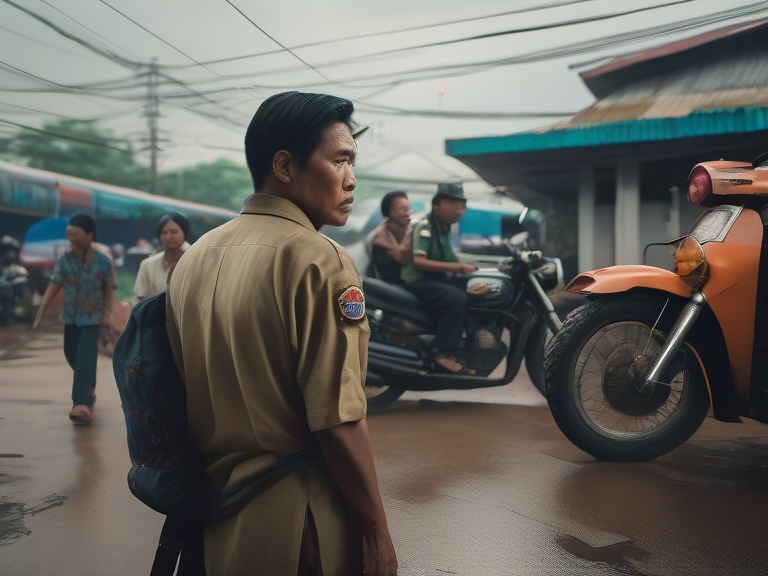
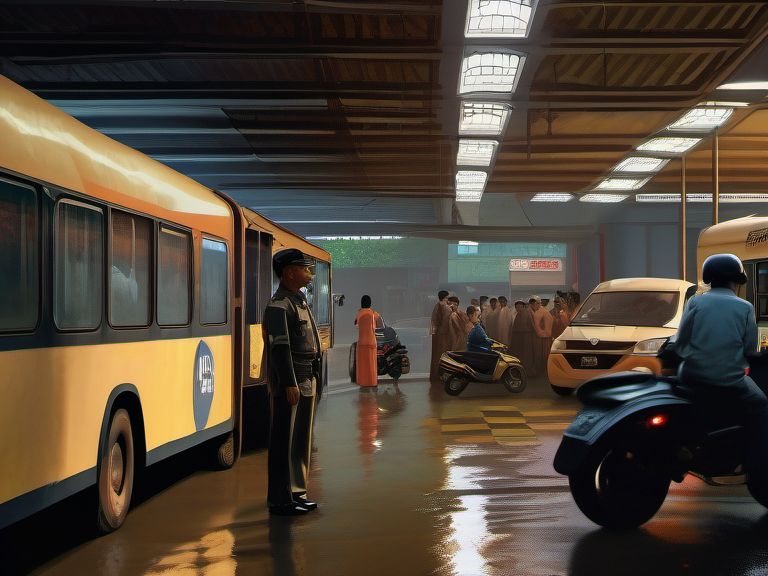
Article 3. Mr. Uan, an employee of Transport Company Limited, who held the position of station security at the Bupha Transport Station, took advantage of his duties to organize vehicle queues and privately contracted services within the station area, collecting monthly fees of 2,000 baht per motorcycle for hired transport. The motorcycle driver refused to pay the aforementioned fees. Mr. Uan then threatened Mr. Klay that if he did not pay, he would not allow him to pick up passengers in the station area, and if he did, he would seize Mr. Klay’s vehicles and burn them. Mr. Klay responded that he would pay or not within three days. The following day, Mr. Uan learned that Mr. Klay had three young children to support and felt sympathy, telling Mr. Klay that he no longer needed the security fee and permitting Mr. Klay to use the vehicles without payment. Subsequently, police investigation revealed that Mr. Uan was coercing drivers for payment at the Bupha Transport Station. The following charges were pursued: to determine the extent of Mr. Uan’s liability against Mr. Klay, as well as to apply the method for safety [26].
The court’s answer determined that Mr. Uan’s actions constituted a violation punishable by Article 337 of the Penal Code.
Mr. Uan was ordered to return the money collected from Mr. Klay. Mr. Uan’s actions constituted a violation under Section 80 of the Penal Code. However, as Mr. Uan had abandoned the act before it achieved its intended result, he was not penalized for attempted coercion. Nevertheless, Mr. Uan’s threats to Mr. Klay, causing Mr. Klay to experience fear, constituted a violation under Section 392 and 82 of the Penal Code. Therefore, he was sentenced under Sections 392 and 82 (5 points) of the Penal Code. Furthermore, given that Mr. Uan’s actions caused others to be frightened through intimidation, as stipulated in Section 392 and 82 (5 points) of the Penal Code, he was sentenced accordingly.
Notably, when the court imposed a sentence on Mr. Uan, and due to Mr. Uan’s conduct causing a lack of safety to the motorcycle taxis in a deliberate manner at the Bupha Transport Station, it was able to invoke the prohibition zone for safety purposes under Sections 39, 44, and 45. The court ordered that Mr. Uan be prohibited from entering Bupha for a period not exceeding five years. Upon completion of the sentence, in addition to the above, Mr. Uan’s actions, taking advantage of his occupation or due to his profession, if allowed to continue, could potentially commit similar offenses. Therefore, it was requested that the safety prohibition method under Sections 39, 50 be applied. The court ordered that Mr. Uan be prohibited from engaging in activities for a period not exceeding five years from the date of sentencing. However, if no prosecution was filed against Mr. Uan or the court was unable to impose a sentence, the safety prohibition method could not be applied.