
Judicial Review of Excessive Imprisonment and Procedural Errors

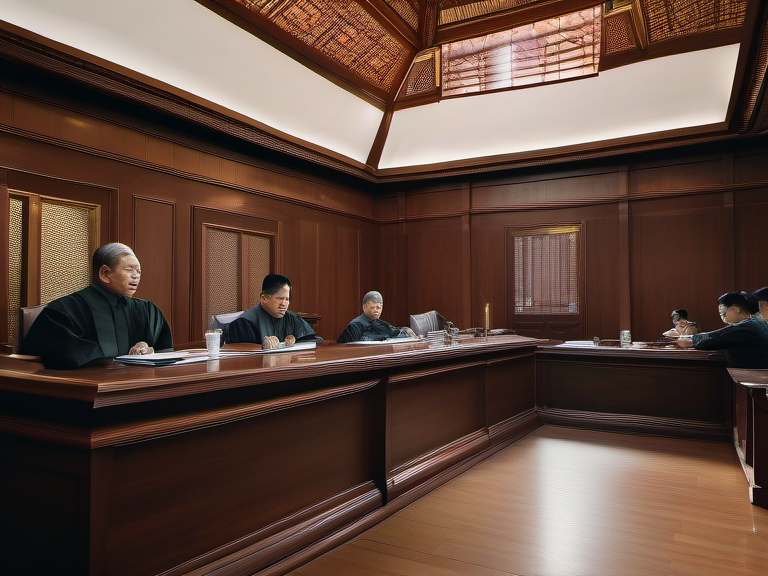
Mr. K. sued Mr. X. on the charge of theft under Section 352 of the Criminal Code before the District Court, with Judge Dam presiding. Upon consideration, Judge Dam sentenced Mr. X. to imprisonment for one year. Judge Dam therefore transferred the case for consultation to Judge Ang. Judge Ang was occupied with a significant case and delegated the matter to Judge Khao, Senior Judge, to conduct investigation and draft the judgment. Judge Dam and Judge Khao jointly signed the judgment ordering imprisonment of Mr. X. for one year, as follows: the judgment of the District Court was consistent with the principles of the Royal Thai Judiciary? Answer: Judge Dam, the sole judge of the District Court, sued Mr. X. against Mr. Y. as stipulated in Section 17 and 2 of the Judicial Code, due to the case involving a sentence of imprisonment not exceeding three years and a fine. However, Judge Dam intended to sentence Mr. X. to imprisonment exceeding one month or a fine exceeding 10,000 Baht, or both. Such a sentence exceeding the prescribed limits was not permissible, constituting an unreasonable deviation, as provided in Section 31(2). This occurred during the drafting of the judgment. In this case, the person authorized to conduct investigation and draft the judgment was 238 cases. This occurred as stipulated in Section 29(1). During the period when Judge Ang, Chief Judge of the District Court, was occupied with other matters, he was deemed unable to perform his duties, therefore a substitute official was appointed in his place, as stipulated in Section 9(4), which states that a Senior Judge or Judge of the District Court shall perform the duties. The Chief Judge of the District Court delegated the matter to Judge Khao, Senior Judge, to conduct investigation and draft the judgment, which conflicted with the principles of the Royal Thai Judiciary, Section 9(4). Furthermore, Section 29(3) did not authorize the assignment of a judge to conduct investigation and draft the judgment. The Senior Judge of the District Court had no authority to sign the judgment. The District Court judgment was therefore inconsistent with the Judicial Code.