
Police Intervention and Unlawful Apprehension of a Suspect

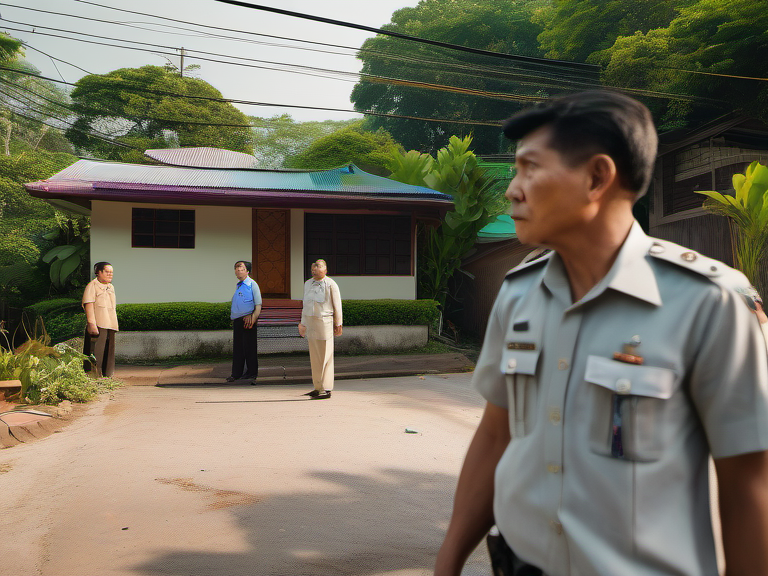
Mr. Sa-ad Laa and Mr. Chuy clearly indicated that they were not disposing of garbage in the designated areas provided by the government for public use in front of their homes, causing some garbage to fall into the drainage pipes, which constituted a minor offense under Section 12, Paragraph 3 of the Penal Code. Upon learning of this situation from his friend, Sergeant Major Sop, Mr. Sa-ad Laa consulted with Sergeant Major Sop, and together they devised a plan to ambush Mr. Chuy at his home during the times that Mr. Chuy typically disposed of his garbage. During this time, Sergeant Major Sop, dressed in civilian attire, emerged with a trash can to dump the garbage onto the public road, identifying himself as a police officer and informing Mr. Chuy to arrest Mr. Suay, taking him to the nearest police station for further proceedings. There was no intention on the part of Sergeant Major Sop to harass or publicly shame Mr. Chuy; however, through the methods employed by Sergeant Major Sop were customary, and he also intended to encourage the residents of the area to maintain cleanliness.
It is ordered that the court determine whether the actions of Sergeant Major Sop are in accordance with the Penal Code. Although Sergeant Major Sop’s discovery of the wrongdoing was accidental, and there was pre-planning and preparation, when an offense is committed in plain sight, as stipulated in Section 80 of the Penal Code, Sergeant Major Sop is permitted to apprehend Mr. Suay without a warrant as stipulated in Section 78 of the Penal Code, as a police officer has a duty to maintain public order and therefore has the authority to apprehend individuals. This authority extends even outside of official working hours or when not actively performing duties.
Furthermore, Section 83 of the Penal Code stipulates that police officers have the authority to request the assistance of others in apprehending a suspect, and the suspect shall be taken to the police station only to be questioned or to prevent escape. It is prohibited to use excessive force beyond what is necessary to prevent escape, as stipulated in Section 86 of the Penal Code. The facts do not indicate that Mr. Suay refused to comply with the order or attempted to flee. Mr. Suay’s actions suggesting an attempt to flee were sufficient grounds for Sergeant Major Sop to apprehend him.
Therefore, the actions of Sergeant Major Sop are in violation of Sections 83 and 86 of the Penal Code.