
Construction Contract Penalty for Delayed Work Order Acceptance
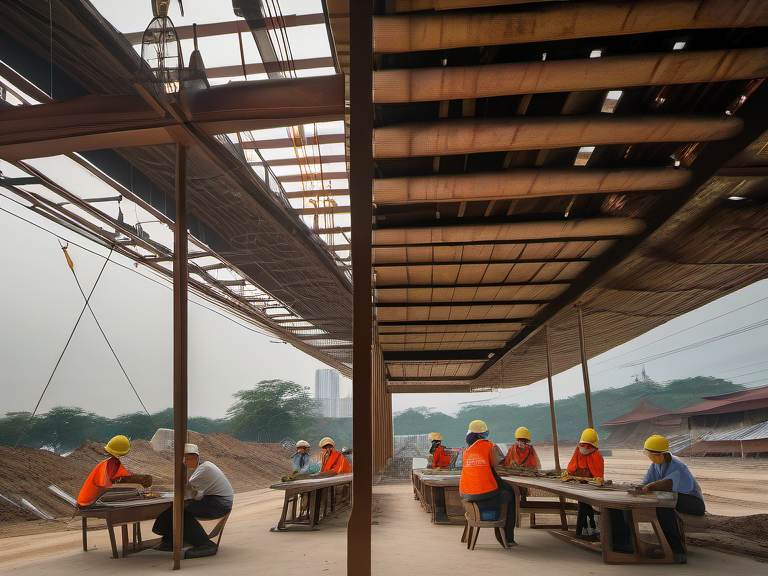

Article 8. The Department of Vocational Education contracted Company A to construct a single administrative building, with the first installment payment scheduled upon completion of the foundation work, subsequent installment payments to be made in three installments upon completion of the work, and the final installment upon completion of the building and readiness for use, with a daily penalty to be applied for each day the work was delayed beyond the contract deadline until the delayed work was completed. The Inspection Committee of the Department of Vocational Education delayed the submission of Work Order 2 by 20 days. The Inspection Committee reserved the right to retain the penalty and, upon completion of the final work order, Company A was required to pay the penalty for the final installment of 20 days together with the penalty for the final installment. However, this did not waive any rights. Upon receiving the acceptance of Work Order 3, which was delayed by 30 days, the Department of Vocational Education demanded that Company A pay the penalty. In the event of non-payment, Company A refused to pay the penalty, claiming that the Department of Vocational Education had not reserved the right to impose a penalty for Work Order 3. It is to be determined whether Company A’s defense is receivable.
The Contract between the Department of Vocational Education and Company A, with the purpose of having Company A perform construction work, refers to the Civil and Commercial Code, Section 587, and Company A to complete the entire building. The work was divided into three installments and inspection was conducted for the purpose of disbursement of the work costs. Therefore, when the Department requested payment for Work Order 3, it was necessary to reserve the right to impose a penalty as stipulated in the Civil and Commercial Code. The Department’s reservation of the right to impose a penalty under the Civil and Commercial Code, Section 381, paragraph 4, regarding the acceptance of Work Order 2, did not constitute a reservation of the right to impose a penalty at the time of payment, as the work was not yet completed and no payment had been made under the contract. However, it is evident that Company A’s acceptance of Work Order 3, which resulted in a payment of the penalty at the time of acceptance, constituted a reservation of the right to impose a penalty at the time of payment. Company A’s defense is not receivable.
The parties ate and consumed alcohol in a restaurant.