
Resistance, Obstruction, and Assault Against Law Enforcement Officials

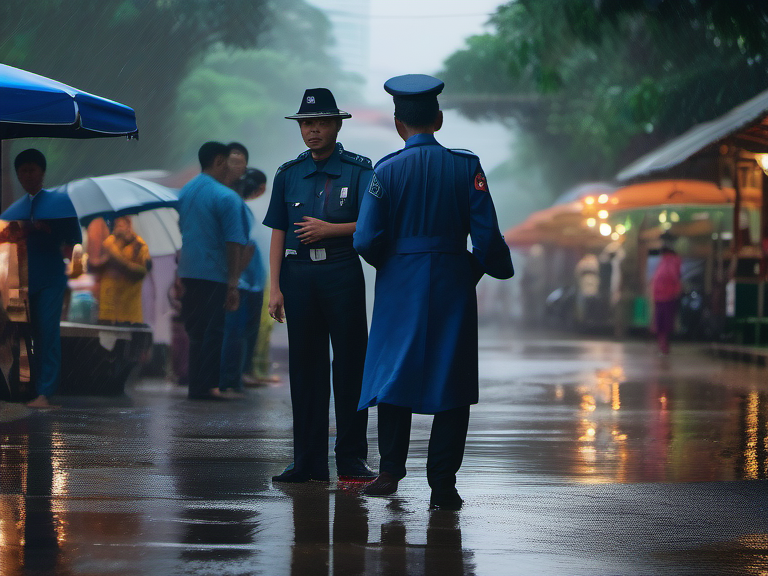
Mr. Chiao committed a crime according to law. The Metropolitan Police Station, Pathum Wan, therefore apprehended him pursuant to a warrant for arrest in the jurisdiction of Pathum Wan Police Station. Mr. Chiao resisted arrest by assaulting a police officer, causing injury, and subsequently fled into the jurisdiction of the Lumphini Police Station. Metropolitan Police Officer Sang then apprehended Mr. Chiao. Mr. Chiao used a firearm to engage in a struggle with the police officer, but the bullet was not fired by anyone. Mr. Chiao was apprehended and presented to the investigating officer at the Pathum Wan Police Station. The investigating officer interrogated Mr. Chiao, alleging resistance and obstruction of a police officer within the jurisdiction of the Pathum Wan Police Station. The investigation report was then forwarded to the Office of the Attorney General. The Office of the Attorney General issued a non-prosecution order for Mr. Chiao, which was approved by the Chief of Police. Subsequently, the investigating officer of the Lumphini Police Station forwarded a charge against Mr. Chiao, the same defendant, for resisting and obstructing a police officer and for acts within the jurisdiction of the Lumphini Police Station to the Office of the Attorney General, requesting prosecution for resisting and obstructing a police officer and for a restraining order based on assault and battery, due to insufficient evidence. Upon presenting the investigation report to the Chief of Police, the Chief of Police issued a dissenting opinion, ordering the prosecution of Mr. Chiao by the Police. The investigation report with the dissenting opinion was forwarded to the Office of the Attorney General. The Office of the Attorney General issued a ruling ordering the prosecution of Mr. Chiao. This occurred because: Let it be determined that Mr. Chiao’s resistance, obstruction, and attempted assault of a police officer in the Pathum Wan area, and his subsequent flight to engage in further resistance and attempted murder of a police officer, were separate and distinct offenses. Therefore, the investigation and ruling of non-prosecution, the investigation and the issuance of a restraining order, and the case in question were distinct matters. Consequently, an investigation and prosecution of Mr. Chiao would not be warranted. (Refer to Penal Code Section 147 – 5 points). The Office of the Attorney General has the authority to make a case-specific ruling when there is a disagreement between the investigating officers, the Attorney General, and the Chief of Police or the Provincial Governor, pursuant to the Act on the Procedure of Criminal Cases, Section 145. Therefore, in the case of Mr. Chiao’s resistance, obstruction, and assault of a police officer and assault of a police officer in the jurisdiction of the Lumphini Police Station, the Office of the Attorney General issued an order to prosecute Mr. Chiao for resisting and obstructing a police officer and for assault and battery of a police officer due to insufficient evidence. The Chief of Police disagreed and ordered the prosecution of Mr. Chiao for assault and battery of a police officer, based solely on the evidence and issued a ruling to prosecute or not prosecute. The Office of the Attorney General did not have the authority to rule on the charge of resisting and obstructing a police officer, which was a separate and distinct offense. (5 points). The available information is limited to 6 points.
Examination questions with answer key for the selection examination to be appointed as a Deputy Prosecutor. Year 2547 (B.E. 2547) – Law of Evidence, the Code of Criminal Procedure, Bankruptcy Law, Constitution Law, Law on the Establishment of District Courts and Criminal Procedure Cases, Law on the Establishment of Juvenile Courts and Family and Juvenile Court Procedure Cases, Administrative Law, Intellectual Property Law, or International Trade Law and the Law on Prosecutors. Sunday, May 8, 2548 (B.E. 2548) and Mr. Thai is the defendant.